

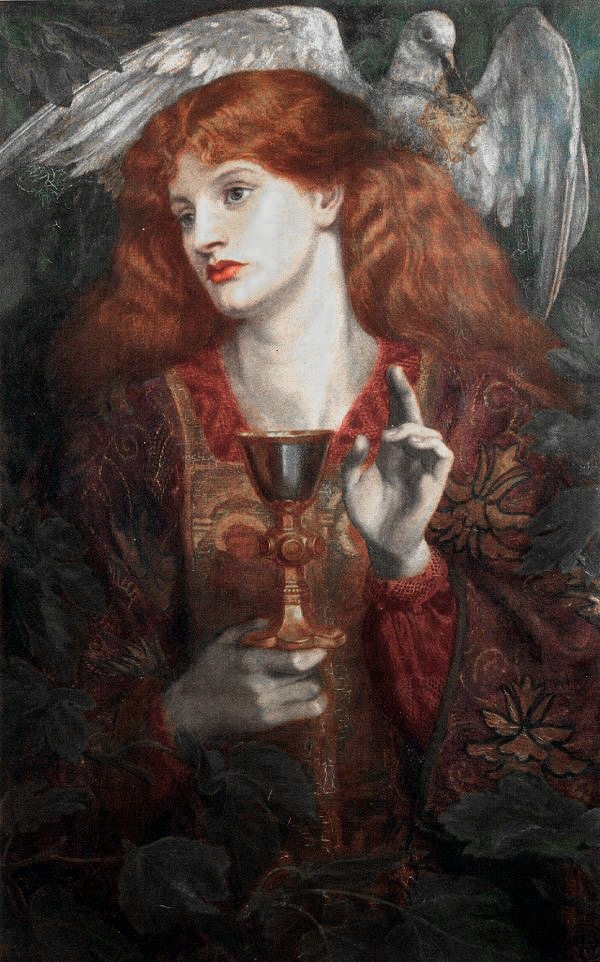

The Holy Grail (French: Saint Graal) is a treasure that serves as an important motif in Arthurian literature. Various traditions describe the Holy Grail as a cup, dish, or stone with miraculous healing powers, sometimes providing eternal youth or sustenance in infinite abundance.
The Holy Grail is more than an object. It is a symbol — an archetype of pursuit, longing, and transformation. For centuries, the legend of the Grail has captivated the minds of seekers, mystics, knights, and scholars. It has never been merely a tale of a chalice that once graced Christ’s hands at the Last Supper. It is a story of something far greater — of a mystery hidden within man, of a path leading to the highest ideal.
When I first delved into ancient myths and legends, I imagined myself uncovering secret places, deciphering enigmas, and reaching truths yet undiscovered. My fascination with these stories carried me ever deeper, until I stumbled upon the legend of the Holy Grail. I pored over books, traced different sources, and analyzed countless versions of the tale, all in search of one answer:
Where is the Grail?
But with time, I realized that this was the wrong question. It was never about where the Grail was, nor even what it was. The true question was:
Who is worthy of finding it?
Galahad, sometimes referred to as Galeas or Galath, is the prime achiever of the Holy Grail in the cyclical prose tradition of the Arthurian legend in which the teenage Galahad is the greatest knight of King Arthur’s Round Table.
In the legends, not every knight who sought the Grail could reach it. Many embarked on the quest, but only one achieved the ultimate vision — Galahad. He was the embodiment of perfection, a man of unblemished purity, both in heart and mind. He endured every trial, overcame every obstacle, and at last, beheld the Grail.
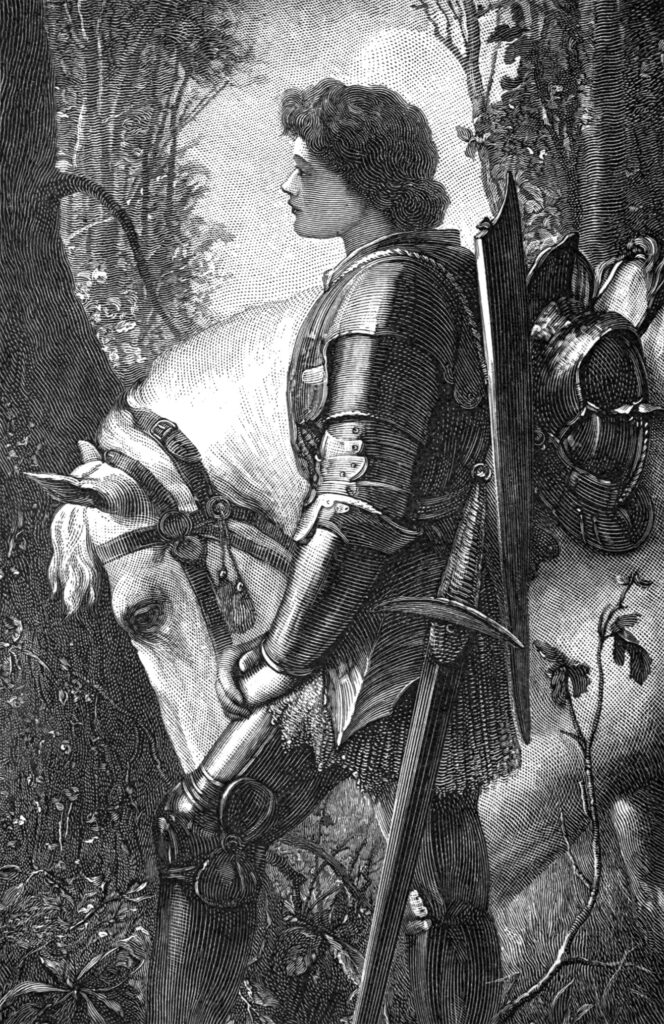
Sir Galahad — George Frederic Watts, 1888
But what does this truly mean? Was the Grail simply a reward for his virtue? Was it a mere artifact to be possessed, proof of his worthiness?
No. The Grail was not the destination.
It was the journey itself.
In a sense, we are all knights on our own sacred quest. Each of us has a Grail — an ideal we seek, whether it is strength of character, mastery of an art, or simply the desire to become the best version of ourselves.
But the path to the Grail is not an easy one. It is a road filled with trials, temptations, and challenges that test us at every turn. At times, the goal seems unreachable, the ideal too distant. Yet, it is precisely this struggle that gives meaning to the journey.
For the Grail is not something to be held in one’s hands.
IT IS SOMETHING WE CARRY WITHIN US.
And in following this path, we do not merely find the Grail.